


-

- Magazine
-
Articles
Automation and AI in the Supplier Industry
Automation and AI are considered particularly promising for optimizing processes in the automotive supply industry. Expectations for their implementation in transforming traditional workflows are correspondingly high: In an increasingly uncertain competitive environment, they are expected to make all the difference. However, the implementation itself is not straightforward. Companies must grapple with data quality, regulatory requirements, and selecting the right tools for each specific situation. In addition, they must determine which technology best fits their own business model.

A complex of buildings for new logistics and production facilities. © Häfele SE & Co KG
Advancing Automation
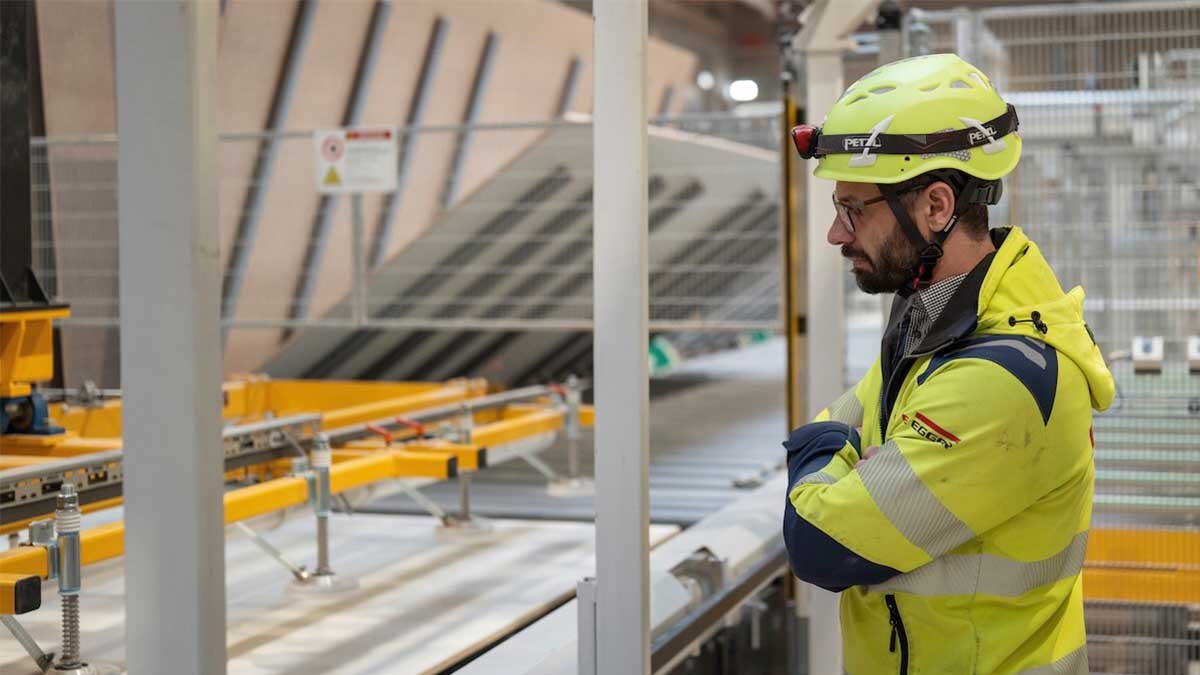
Major players in the furniture supply industry, such as Egger, Häfele, Pfleiderer, and Swiss Krono, have recently redesigned parts of their processes for automation. Automated production lines enable more efficient processes, improve workplace safety, and increase precision in production. Tasks that were previously performed manually—such as replenishing materials or unstacking laminated wood panels—are now carried out automatically. Warehousing is also being automated with state-of-the-art systems to increase shipping capacity and optimize packaging and logistics processes. Small and medium-sized enterprises are also benefiting from this development, as compact production layouts now enable a high degree of automation with minimal space requirements.
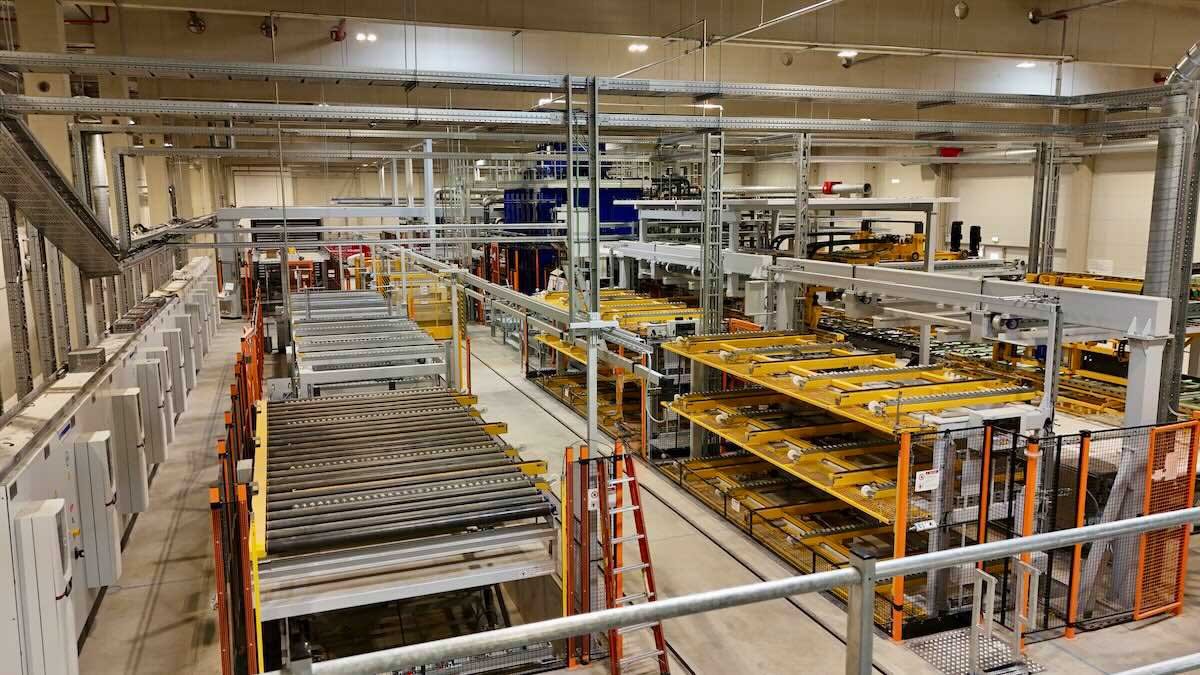
New high-speed press with a high degree of automation for wood-based materials. © Pfleiderer Deutschland GmbH
Support for Support Functions
While many companies now view automation as a strategic necessity, the use of AI is often still in the development stage. Integration into existing systems and processes is seen as the biggest challenge to its adoption. Nevertheless, many companies are already using well-known AI tools such as chatbots or image generators in their day-to-day operations. One example of their application is the expansion of support functions such as customer consulting and assistance. Custom-created avatars make customer interactions and appointment preparation more efficient. When searching for products, generative AI helps with recommendations and usage tips. Bill of materials (BOMs) with material quantities can also be created using AI chatbots.
Optimizing Planning
In addition to personalized consulting, AI also assists with product planning. It is integrated directly into CAD software to, for example, analyze material images in a matter of seconds and identify suitable finishes. Together with customers, suppliers can plan furniture or built-in fixtures in real time and convert models directly into production data. Models can also be easily uploaded to online libraries, allowing customers to make changes and submit suggestions from home. Thanks to improved data processing and faster computing power, companies are now able to perform continuous model updates. AI also significantly speeds up the processing of requests for proposals and reduces sources of error. With real-time data and constant optimization, supply chains can also adapt much more quickly to changing circumstances.
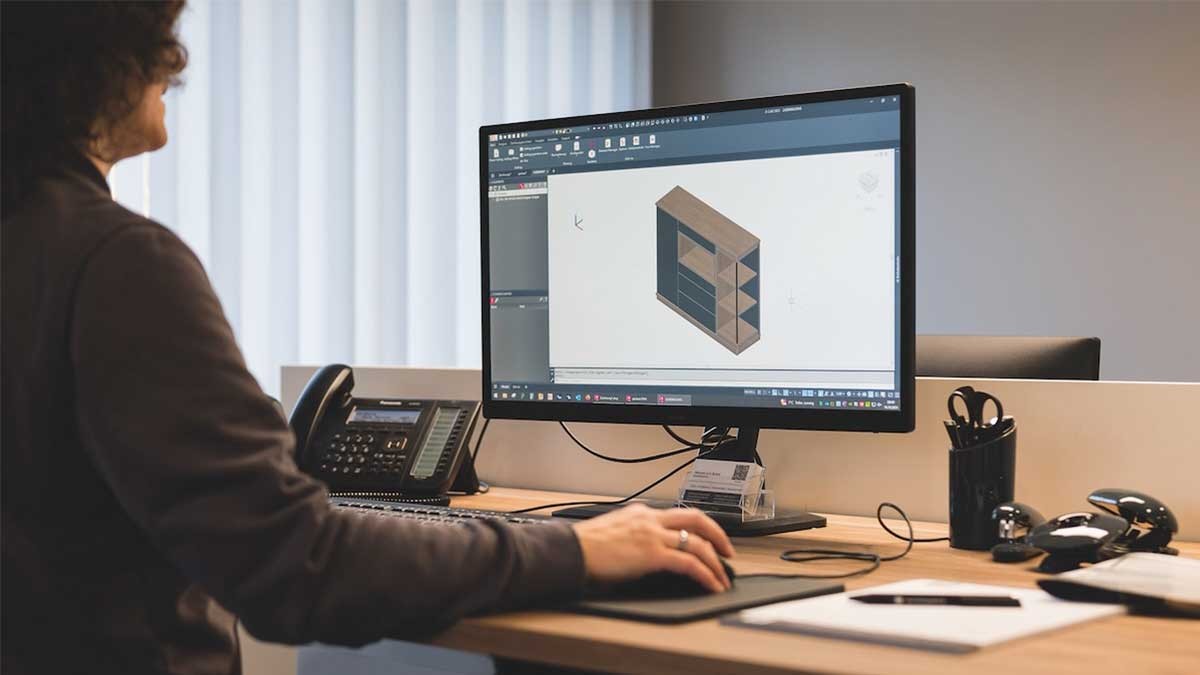
High-quality CAD data is essential for smooth manufacturing processes. © Hettich GmbH & Co. KG/Bild: Thomas Weber
Better Adaptation of Supply Chains
As interconnected systems, supply chains seem particularly well-suited for optimization with AI. The technology has been used here for some time to support route planning and inventory management, for example. New forms of AI could also significantly improve the resilience and adaptability of supply chains, which is becoming increasingly important in light of current geopolitical challenges. In addition, logistics networks must increasingly respond to regulations regarding sustainability and transparency. Against this backdrop, autonomous AI helps companies restructure and manage their supply chains. It is still a vision for the future, but at some point, AI agents could design supply chains in a fully automated and autonomous manner.
New Foundations for Collaboration
In the future, the success of companies will also depend on establishing new partnerships and collaborative networks along the entire value chain. The “VR-Chain” collaborative project has investigated how this can be structured in a sustainable, networked, and cooperative manner. With the participation of the University of Bremen and other stakeholders, this research project—which runs through August 2026—is exploring the potential of interactive VR spaces for cross-organizational coordination. A central aspect of this is the integration of real-world work environments using 3D scans and mixed reality. Specific production and logistics contexts were transferred into virtual spaces and made jointly accessible. This allows different perspectives along the value chain to be interwoven, enabling companies to respond more effectively to changing conditions.
Outlook for the Industry
Automation and AI are transforming many areas of the furniture supply industry—from manufacturing and inventory management to planning, logistics, and customer communication. As part of the industry’s digital transformation, they thus offer significant added value. It remains to be seen to what extent they will help make companies more resilient to future economic and geopolitical challenges. In general, developments are progressing very rapidly, as AI is continuously being trained and improved. However, successful implementation will always depend on a company’s specific circumstances and on a solid foundation of valid data. Even today, it is already clear what new opportunities AI offers for process optimization, creative design, and day-to-day workflows.


